 BOOK OR CHANGE APPOINTMENT
 Clinic Hours
 Email Us


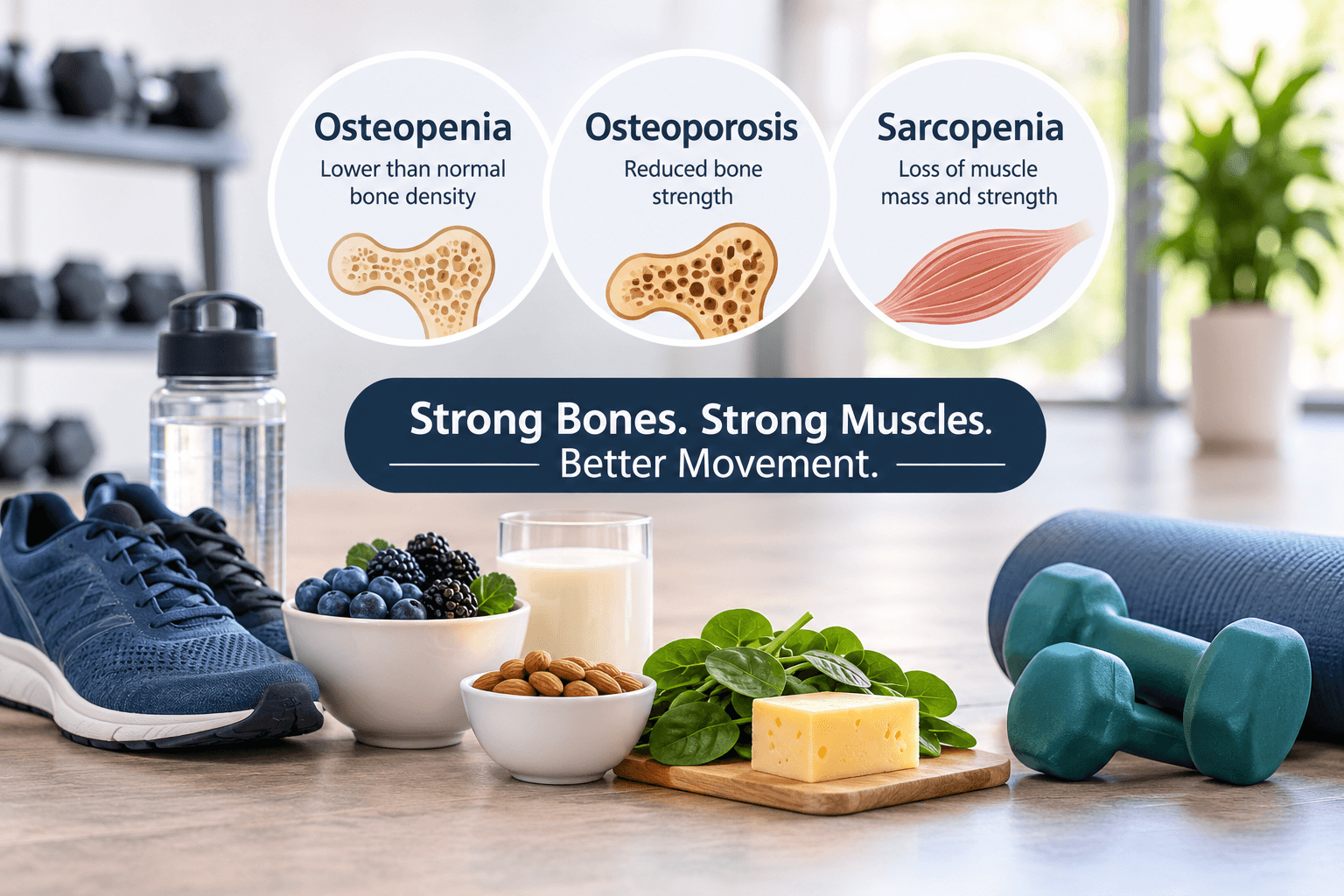 As we get older, changes in our bones and muscles can affect how we move, feel and perform everyday activities. While some changes are a natural part of ageing, significant losses in bone density and muscle strength are not something we should simply accept.
Osteopenia, osteoporosis and sarcopenia are three conditions that can influence our strength, mobility and long-term physical health. Although they affect different parts of the body, they can often overlap.
The good news is that there are practical steps you can take to support your bone and muscle health, maintain independence and stay active throughout life.
What is the difference between osteopenia, osteoporosis and sarcopenia?
Osteopenia: The early warning sign of reduced bone density
Osteopenia refers to bone mineral density that is lower than normal, but not low enough to meet the diagnostic threshold for osteoporosis.
It is commonly identified through a bone mineral density (DEXA or DXA) scan. Although osteopenia does not automatically progress to osteoporosis, it can indicate an increased risk of developing further bone loss and fractures.
Identifying reduced bone density early provides an opportunity to review lifestyle factors and take steps to support long-term bone health.
Osteoporosis: When bones become more fragile
Osteoporosis is a condition characterised by reduced bone strength, making bones more susceptible to fractures.
Bone loss can occur gradually without noticeable symptoms, meaning some people only discover they have osteoporosis after experiencing a fracture.
Common fracture sites include the hip, wrist and spine. Spinal compression fractures can also contribute to changes in posture, reduced height and back discomfort.
Ageing, hormonal changes, family history, certain medications and lifestyle factors can all contribute to osteoporosis risk.
Sarcopenia: The loss of muscle strength and mass
While osteopenia and osteoporosis affect bone health, sarcopenia affects skeletal muscle.
Sarcopenia involves a progressive decline in muscle strength, muscle quantity and physical performance. It becomes more common with age but can also be influenced by inactivity, inadequate nutrition and certain health conditions.
Some common signs include:
- Difficulty getting up from a chair.
- Reduced grip strength.
- Feeling weaker when climbing stairs.
- Slower walking speed.
- Reduced balance and physical endurance.
Maintaining muscle strength is important not only for everyday movement but also for supporting balance, stability and independence.
Why are bone and muscle health connected?
Our bones and muscles work together to support movement and physical function.
Muscles generate forces that place mechanical demands on bones, helping stimulate the processes involved in maintaining bone strength. At the same time, stronger muscles can improve balance, coordination and our ability to respond to unexpected movements.
When muscle strength and bone density both decline, the consequences can be significant. A person may become less confident moving around, experience more difficulty with everyday activities and have an increased risk of falls and fractures.
This is why looking after both bone and muscle health is important throughout adulthood, not just later in life.
What can you do to support your bone and muscle health?
There is no single exercise or lifestyle change that addresses everything. Instead, a combination of appropriate exercise, nutrition and healthcare support can make a meaningful difference.
1. Incorporate resistance training
Strength training is one of the most important ways to maintain and improve muscle strength.
Exercises using weights, resistance bands or body weight can help maintain muscle mass and improve functional capacity.
Examples include:
- Sit-to-stands and squats.
- Step-ups.
- Resistance band exercises.
- Seated or standing rows.
- Supported calf raises.
The appropriate exercises, resistance and progression will depend on your current strength, health and physical capabilities.
2. Include appropriate weight-bearing exercise
Weight-bearing activities encourage bones to adapt to mechanical loading.
Depending on your health and fitness levels, activities may include:
- Walking.
- Stair climbing.
- Dancing.
- Resistance-based exercise.
- Appropriate impact-based activities.
For people with established osteoporosis or a history of fractures, exercise selection should be individualised. Higher-impact activities and certain spinal movements may not be appropriate without professional guidance.
3. Improve balance and functional movement
Maintaining balance and coordination becomes increasingly important as we age.
Balance exercises can help improve confidence and physical function, while functional exercises help prepare the body for everyday activities.
Examples include supported single-leg standing, controlled step-ups and sit-to-stand exercises.
4. Prioritise adequate nutrition
Nutrition plays an important role in maintaining healthy bones and muscles.
Some important considerations include:
- Calcium: Essential for maintaining bone structure and strength.
- Vitamin D: Helps the body absorb calcium and supports normal muscle function.
- Protein: Provides the building blocks required for maintaining and repairing muscle tissue.
A balanced diet containing adequate protein, calcium and vitamin D is important. Supplements may be appropriate for people with specific dietary gaps or deficiencies, but should be discussed with a healthcare professional rather than taken routinely.
5. Stay physically active
Regular movement helps maintain strength, mobility and general physical health.
Reducing prolonged periods of sitting, incorporating regular walks and maintaining an exercise routine can all contribute to better long-term physical function.
Consistency is more important than trying to do everything at once.
How can Williamstown Chiropractic Health Group help?
At Williamstown Chiropractic Health Group, we recognise the importance of maintaining strength, mobility and physical function throughout life.
Whether you have been diagnosed with osteopenia or osteoporosis, are noticing a decline in muscle strength, or simply want to remain active as you get older, understanding your individual needs is an important starting point.
Our approach may include:
- Movement and functional assessment: Understanding how you move and identifying areas where mobility, strength or physical function may be limited.
- Individualised exercise guidance: Discussing appropriate movements and strengthening exercises based on your presentation and capabilities.
- Musculoskeletal care: Providing appropriate care for associated musculoskeletal complaints, taking existing diagnoses and bone health into consideration.
- Collaborative healthcare: Where appropriate, working alongside your GP, exercise physiologist, physiotherapist or dietitian to support a broader approach to your health.
For individuals with osteoporosis, exercise and manual therapy recommendations require particular consideration. Care should always be adapted to the individual’s bone health, fracture history and clinical presentation.
We also encourage appropriate medical assessment, including bone density testing when indicated, to help identify and monitor changes in bone health.
Take an active approach to ageing
Osteopenia, osteoporosis and sarcopenia can influence how we move, feel and function, but declining strength and mobility should not simply be accepted as an inevitable part of ageing.
Building and maintaining muscle strength, supporting bone health and staying physically active are important steps towards maintaining independence and quality of life.
You don’t need to wait until you experience a fracture, significant weakness or difficulty with everyday activities before taking an interest in your bone and muscle health.
If you have concerns about your strength, mobility or bone health, speak with your healthcare professional about the next steps.
At Williamstown Chiropractic Health Group, we’re here to help you better understand your musculoskeletal health and explore appropriate ways to keep moving.